Downsizing in Brooklyn Heights
Brooklyn Heights is a residential neighborhood in Kings County with a city-designated historic district, a waterfront promenade and several subway stations within the neighborhood or at its edge. Downsizers here are usually choosing between a co-op or condo apartment and a smaller row house, and the building's rules matter as much as the floor plan.
- Local government
- City of New York, Kings County
- Smaller-home types
- Co-ops, condos, row houses
- Nearest hospital
- The Brooklyn Hospital Center
- Evacuation zone
- Check by address
Brooklyn Heights at a glance
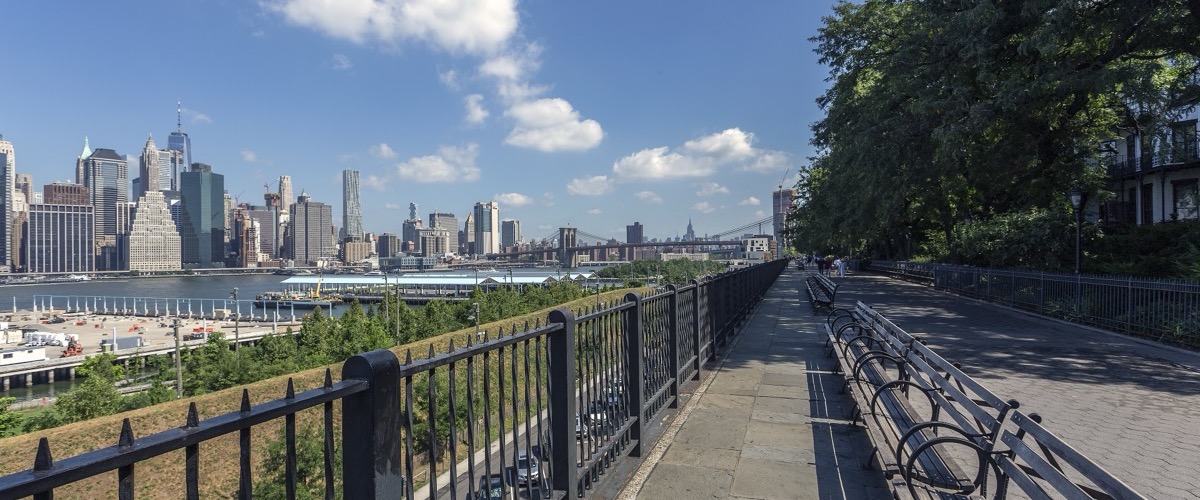
Brooklyn Heights sits on Brooklyn's waterfront, and its best-known feature is the Brooklyn Heights Promenade, an esplanade that NYC Parks places between Joralemon and Orange Streets, alongside Columbia Heights and above the Brooklyn-Queens Expressway.
The Landmarks Preservation Commission designated the Brooklyn Heights Historic District on November 23, 1965. The district's boundaries run along streets including Atlantic Avenue, Fulton Street, Henry Street and Clark Street, and the LPC publishes a map of them.
Sources: LPC, Brooklyn Heights Historic District map (LP-0099); NYC Parks, Brooklyn Heights Promenade.
Co-ops, condos and row houses in Brooklyn Heights
Housing here falls into a few groups, and the ownership form changes what you are buying.
- Apartments in co-op and condo buildings. A co-op purchase is shares in a corporation plus a proprietary lease, with maintenance charged by share count. A condo purchase is a deeded unit with an interest in the common elements. The Attorney General's office advises reading the entire offering plan and consulting an attorney before signing. Boards are generally not required to give reasons for turning down a buyer, so ask early about the board package and timing.
- Row houses. Historic-district streets contain row houses, and a smaller one can suit an owner who wants to keep stairs and a small garden. Exterior work on any landmarked building needs LPC review, which the LPC's permit guidebook explains, so budget time for it before repairs.
- Elevator or walk-up. Ask about the entrance steps, the elevator and the route to laundry and storage before you tour, and whether the building's own rules allow the alterations you want inside.
No single building is a safe assumption. When a listing names a building, get the offering plan or the seller attorney's summary to confirm whether it is a co-op or condo. Our co-op and condo buying guide and the comparison of co-ops, condos, townhouses and houses cover the differences in detail.
Sources: NY Attorney General, buying a co-op or condo; LPC, Permit Application Guide.
Getting around Brooklyn Heights
The MTA's line maps list Clark St and Borough Hall on the 2 line, and Court St on the R line. Borough Hall is listed with 2, 3, 4 and 5 service that varies by time of day and is marked accessible except for the Court St R platform. Clark St appears on the map without the accessible label. Check the MTA's accessibility information for the exact entrance you would use.
The MTA also says some Long Island Rail Road trains begin or end at Atlantic Terminal in Brooklyn. For bus routes and door-to-door trips from a specific address, use the MTA trip planner.
Sources: MTA, 2 line map; MTA, R line map; MTA, Long Island Rail Road.
Health care near Brooklyn Heights
The Brooklyn Hospital Center is at 121 DeKalb Avenue in Fort Greene and lists emergency medicine among its services. Confirm that your doctors and plan participate before you rely on any one hospital.
Source: The Brooklyn Hospital Center, main hospital.
Everyday life in Brooklyn Heights
- Brooklyn Bridge Park. A waterfront park along the East River. Hours and events are on brooklynbridgepark.org.
- The Promenade. A walking esplanade along Columbia Heights, described above.
- Montague Street. A shopping and dining street with its own business improvement district; the Montague Street BID keeps a business directory.
- Brooklyn Public Library. Find the nearest branch and its hours with the library's location finder.
- Services for older adults. Heights and Hills, a nonprofit at 81 Willoughby Street, offers case management and caregiver support for adults 60 and older, and NYC Aging lists older adult centers by borough through its site or Aging Connect at 212-244-6469.
Storms, flooding and insurance in Brooklyn Heights
Parts of Brooklyn Heights are close to the water and other blocks are not, so risk is a question about a specific address. Kings County was among the counties in the federal disaster declaration for Hurricane Sandy in October 2012.
- Look up the address in the city's Hurricane Evacuation Zone Finder. The city explains its six zones on its evacuation page.
- Check the flood insurance map at the FEMA Flood Map Service Center. Evacuation zones and FEMA flood zones are different maps.
- Standard homeowners, condo and co-op policies exclude flood, so ask about a separate flood policy. FloodHelpNY offers guidance.
- In a condo or co-op, ask where the mechanical equipment sits and what the building's policy covers.
Our flood and storm insurance guide explains the details.
Property taxes and local government in Brooklyn Heights
Brooklyn Heights is in Kings County, and the city bills property tax. Owners 65 or older with combined income of $58,399 or less may apply for the Senior Citizen Homeowners' Exemption on a primary residence, including co-ops and condos, by March 15 (March 16 in 2026). The state's Enhanced STAR benefit for owners 65 and older applies to school taxes, and buyers register with the state for it. Co-op and condo owners may also see the city's tax abatement, which the co-op board or condo board applies for on behalf of the building. When you sell, New York State and City transfer taxes apply; the net proceeds calculator estimates them. Details are in costs and money and the senior property tax exemptions guide. Figures reflect current law and can change, and a lawyer or CPA licensed in New York should confirm them for your situation.
Sources: NYC 311, SCHE; NY Tax Department, STAR; NYC Finance, co-op and condo abatement.
Questions to ask before you buy in Brooklyn Heights
- Is this address inside the Brooklyn Heights Historic District, and would work I want to do need an LPC permit?
- Is the building a co-op or a condo, and what do the offering plan and financial statements show about reserves and planned assessments?
- What is the flip tax or other transfer fee if it is a co-op, and who pays it?
- Does the co-op board require a board package and interview, and how long does approval usually take?
- Is there an elevator, and how many steps lie between the street and the apartment door?
- Which subway entrance would I use, and does it have an elevator?
- What does the address show on the evacuation zone finder and the FEMA map, and does the building carry flood insurance on its equipment?
The step-by-step downsizing plan lays out the order of these decisions. If you would like an introduction, get matched with an agent on the operating team at eXp Realty. Introductions go only to agents on that team, so this is not a search of the whole market.
Questions people ask
Is Brooklyn Heights a historic district?
Yes. The New York City Landmarks Preservation Commission designated the Brooklyn Heights Historic District on November 23, 1965. Work on the exterior of a building inside the district generally needs an LPC permit, so ask whether an address is inside the boundary and whether any work you plan would need one.
Are Brooklyn Heights apartments co-ops or condos?
Both kinds of building exist in New York City, and the two are different legal products. A co-op buyer purchases shares and a proprietary lease; a condo buyer gets a deeded unit. Do not assume from the address: ask the seller's attorney for the offering plan and the building's governing documents.
Which county and tax office serve Brooklyn Heights?
Brooklyn Heights is in Kings County and is part of New York, so property tax is billed by the NYC Department of Finance. Senior and STAR benefits are applied for through the city and the state rather than a county office.
How do I check flood and evacuation risk at a Brooklyn Heights address?
Use the city's Hurricane Evacuation Zone Finder for the evacuation zone and the FEMA Flood Map Service Center for the flood insurance map. They are separate maps, so check both for the exact address.
More neighborhoods to compare
- Bay RidgeSouthwest Brooklyn, with brick two-family homes, apartment buildings and the Shore Road waterfront.
- Park SlopeRow houses and apartment buildings on the slope west of Prospect Park.
- Sheepshead Bay and Manhattan BeachA bayfront part of south Brooklyn where a flood check comes before the floor plan.
- Carroll Gardens and Cobble HillLandmarked brownstone blocks between Atlantic Avenue and the Gowanus Canal.
- Upper West SideCo-ops and condos between Central Park and Riverside Park, with the 1 and C lines.
- Upper East SideCo-op and condo buildings between Central Park and the East River, near major hospitals.
Talk it through with a local downsizing specialist
We can introduce you to a licensed New York area agent with eXp Realty who works with homeowners moving to less house. New York Downsizing is operated by licensed agents affiliated with eXp Realty and is not a New York brokerage.