Downsizing on the Upper East Side
The Upper East Side runs from Central Park east to the East River, with several landmark districts, three large hospitals and a mix of co-op and condo apartment buildings. This page covers what moving smaller here involves: housing types, subway lines, care, parks, storm questions and taxes.
- Local government
- City of New York (New York County)
- Smaller-home types
- Co-ops, condos, converted townhouse apartments
- Nearby hospitals
- Lenox Hill, NewYork-Presbyterian/Weill Cornell, Mount Sinai
- Evacuation zone
- Check by address
The Upper East Side at a glance
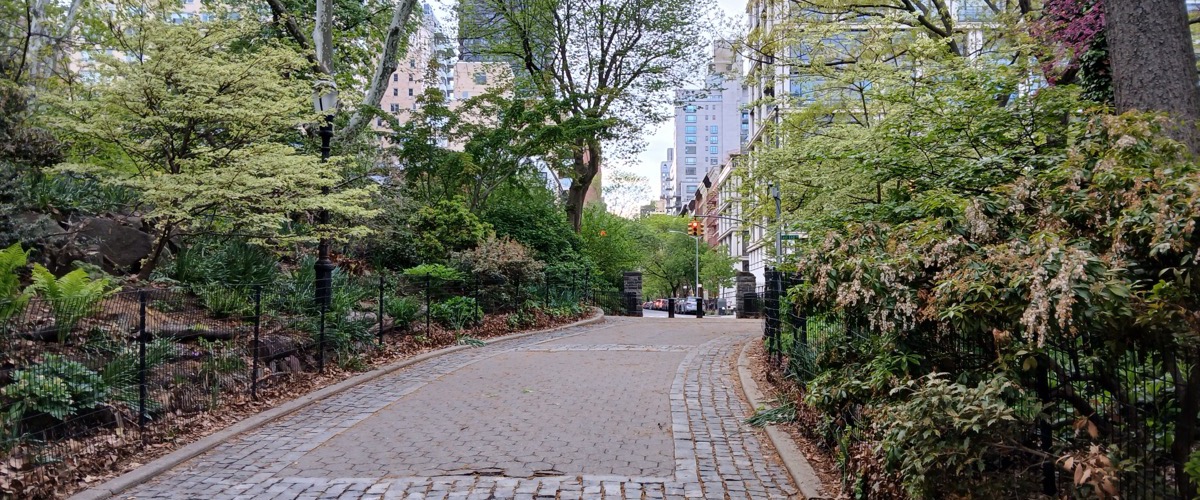
The neighborhood sits between Central Park on the west and the East River on the east. Carl Schurz Park, a 15.2-acre park from East 84th to East 90th Street and East End Avenue to the river, holds Gracie Mansion, the mayor's official residence since 1942. Its riverside John Finley Walk promenade was built over the FDR Drive.
The city has designated several historic districts here, including the Upper East Side Historic District, the Metropolitan Museum Historic District, Carnegie Hill and its expansion, Treadwell Farm and Henderson Place. The Landmarks Preservation Commission's own guidance for Madison Avenue describes converted rowhouses, apartment buildings, hotels and churches within those districts, so a single block can mix building types.
Sources: NYC Parks, Carl Schurz Park; NYC Landmarks Preservation Commission; LPC Madison Avenue storefront master plan.
Co-ops, condos and townhouse apartments on the Upper East Side
The main choices here are elevator co-ops, condominiums and apartments in older townhouses. Each fits differently.
- Elevator co-ops. You buy shares and a proprietary lease. The board application, financial requirements, flip tax and sublet rules live in the building's bylaws, proprietary lease and house rules. Ask for those documents before you make an offer.
- Condominiums. You own a deeded unit. The declaration and bylaws say whether the board has a right of first refusal, and the state Attorney General's rules require condo offering plans to say so.
- Converted townhouse apartments. Some buildings that began as rowhouses are now apartments. Many have stairs and no elevator, so look at the entry, the interior stairs and who maintains the roof.
If a building is in a landmark district, ask what that means for window replacement or terrace work. See the co-op and condo guide for how board approval and closing work.
Sources: NY Attorney General, cooperatives; 13 NYCRR 20.3.
Getting around the Upper East Side
The MTA's 6 line page lists local stops on Lexington Avenue at 68 St-Hunter College, 77 St, 86 St and 96 St, and the 4 and 5 also stop at 86 St. On Second Avenue, the Q line page lists stops at 72 St, 86 St and 96 St. Use the MTA trip planner for specific routes, and check the accessible stations list for elevators at the stations you would use.
Sources: MTA, 6 line map; MTA, Q line map.
Hospitals and health care on the Upper East Side
Three hospitals with emergency departments sit on the Upper East Side: Lenox Hill Hospital at 100 East 77th Street, NewYork-Presbyterian/Weill Cornell Medical Center at 525 East 68th Street and The Mount Sinai Hospital at 1468 Madison Avenue, which spans East 98th to 102nd Street between Madison and Fifth Avenues. Confirm that your own doctors and plan are tied to the one you would use.
Sources: Lenox Hill Hospital; NewYork-Presbyterian Weill Cornell; The Mount Sinai Hospital.
Parks, libraries and everyday life on the Upper East Side
- Parks and museums. Central Park's eastern edge runs along Fifth Avenue, where the Metropolitan Museum of Art sits inside the park. Carl Schurz Park has the East River promenade and Gracie Mansion.
- Libraries. NYPL branches include 67th Street at 328 East 67th Street, Yorkville on East 79th Street, Webster at York Avenue and 78th Street and 96th Street at 112 East 96th Street.
- Greenmarkets. The 82nd Street Greenmarket, between First and York Avenues, runs Saturdays year-round. The Ruppert Park Greenmarket on Second Avenue between 90th and 91st Streets runs Sundays.
- Older adult programs. The Carter Burden Network runs the Bill Dionne Luncheon Club and Older Adult Program for people over 60 on weekdays. NYC Aging lets you find other centers near you.
Sources: Central Park Conservancy; NYPL locations; GrowNYC; Carter Burden Network.
Storms, flooding and insurance on the Upper East Side
Evacuation zones and FEMA flood zones are assigned by address, and the two maps do different jobs. The city's evacuation zones rank storm surge risk, while FEMA flood maps drive insurance requirements. Check any address you are considering in the hurricane evacuation zone finder, on the FEMA Flood Map Service Center and on the city's flood maps page. A condo or co-op unit policy usually excludes flood, so ask about a separate policy and what the building's policy covers. Our flood and storm insurance guide explains the process.
Taxes and local government on the Upper East Side
The Upper East Side is in the City of New York and New York County. There is no separate town or village tax bill; the city's Department of Finance handles property taxes and exemptions.
- SCHE. The Senior Citizen Homeowners' Exemption requires age 65 or older, a primary residence and combined owner income of $58,399 or less, with reductions from 50% down to 5%. Co-ops use a separate application, and renewal is every two years.
- Enhanced STAR. For owners 65 and older with income of $110,750 or less for 2026-27. In New York City it also applies partly to city taxes, and the state's tax department explains how to register.
- Co-op and condo abatement. The board applies for the building, and each owner certifies that the unit is a primary residence.
On a sale, the NYC Real Property Transfer Tax is 1% of the price up to $500,000 and 1.425% above that. See the senior exemptions guide, costs and money and the net proceeds calculator. None of this is tax advice.
Sources: NYC311, SCHE; NYS Tax, STAR; NYC Finance abatement; NYC Finance RPTT.
Questions to ask before you buy on the Upper East Side
- What does the co-op board package require, how long does approval take and what is the flip tax, in writing?
- What are the sublet rules, and are there limits on owners who do not live in the apartment full time?
- Does the building sit inside a landmark district, and what does that mean for windows, terraces and any work you plan?
- Is there a doorman or an elevator, and what happens to access during elevator repairs?
- What does the maintenance or common charge cover, and are any assessments planned?
- How does the building handle deliveries, package storage and moving hours when you move in or out?
- Which hospital and subway station would you actually use, and what is the trip from the door?
Compare with the Upper West Side or Murray Hill and Kips Bay, and see all neighborhoods. Introductions through this site go to agents on the operating team at eXp Realty, so this is not a search of the whole market. If you want one, get matched with a downsizing specialist.
Questions people ask
Which historic districts are on the Upper East Side?
The Landmarks Preservation Commission's Manhattan list includes the Upper East Side Historic District and its extension, the Metropolitan Museum Historic District, the Carnegie Hill and Expanded Carnegie Hill districts, Treadwell Farm and Henderson Place. If a building is inside one, ask how that affects window and facade work before you plan a renovation.
What hospitals are on the Upper East Side?
Lenox Hill Hospital is at 100 East 77th Street, NewYork-Presbyterian/Weill Cornell Medical Center is at 525 East 68th Street and The Mount Sinai Hospital is at 1468 Madison Avenue. Each lists an emergency department. Which one is best for you depends on your doctors and your insurance network.
Does the Q train run on the Upper East Side?
Yes. The MTA's Q line page lists stops on Second Avenue at 72 St, 86 St and 96 St. The 6 runs on Lexington Avenue with local stops at 68 St-Hunter College, 77 St, 86 St and 96 St, and the 4 and 5 also stop at 86 St. Check your specific trip in the MTA trip planner.
How is a co-op sale different from a condo sale here?
A co-op buyer purchases shares and a proprietary lease, and the board's own rules govern approval, sublets and any flip tax. A condo buyer takes a deeded unit under the declaration and bylaws. Both are outside the state's Property Condition Disclosure Act, so the building's financial documents matter more.
More neighborhoods to compare
- Upper West SideCo-ops and condos between Central Park and Riverside Park, with the 1 and C lines.
- Battery Park CityWaterfront condos and rentals on ground-leased land, with parks and a resilience build-out.
- Murray Hill and Kips BayEast Side co-ops, condos and brownstones near the 6 train, Grand Central and NYU Langone.
- ChelseaLandmarked row houses and large West Side co-op complexes beside the High Line.
- Greenwich Village and West VillageHistoric districts, row houses and apartment buildings around Washington Square Park.
- HarlemRow houses, co-ops and condos in Central Harlem, with the 2, 3 and A/B/C/D.
Talk it through with a local downsizing specialist
We can introduce you to a licensed New York area agent with eXp Realty who works with homeowners moving to less house. New York Downsizing is operated by licensed agents affiliated with eXp Realty and is not a New York brokerage.